
Metal Roof vs Shingles: Which Is Right for Your East Bay Home?
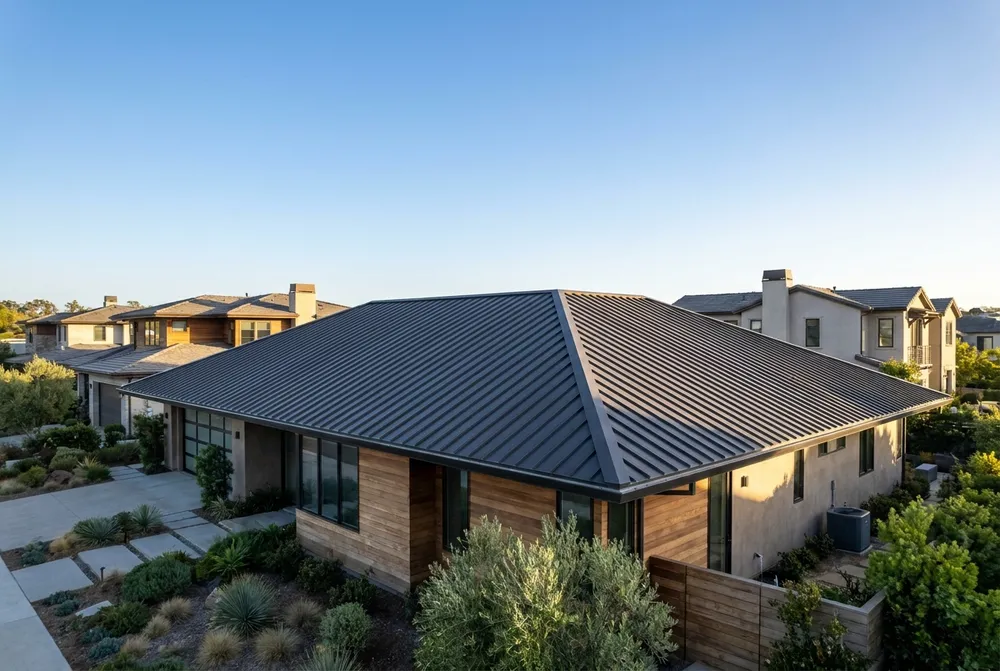
As of 2026, a standing-seam metal roof in the East Bay costs about $14,000 to $30,000. Architectural shingle costs about $10,000 to $18,000. Metal costs more up front. But it lasts 40 to 70 years, two to three times a shingle roof's 15 to 25 years. It also stands up better to fire, wind, and moss. Shingle costs less today and still works well on many homes, especially away from the hills.
What is the real cost difference between a metal roof and a shingle roof?
Here is how the two materials compare, in Tradition's published 2026 East Bay ranges:
| Roof type | Typical 2026 East Bay range | Typical lifespan |
|---|---|---|
| Architectural shingle | $10,000 to $18,000 | 15 to 25 years |
| Standing-seam metal | $14,000 to $30,000 | 40 to 70 years |
These are typical ranges, not a quote. Shingle wins on day-one price. Metal costs more up front, often several thousand dollars more on a typical home. But the real comparison is not just the sticker price. It is what each dollar buys over the life of your roof. Call for a free estimate. We will measure your roof and price both options side by side before you decide.
Which roof lasts longer in East Bay weather?
Metal lasts longer, often by a wide margin. A quality standing-seam metal roof runs 40 to 70 years. A typical asphalt shingle roof needs replacing in 15 to 25 years. Over the life of one home, a metal roof can outlast two or three shingle roofs. So its higher price up front often spreads into a lower cost per year.
Standing-seam panels with a good coating resist rust and fading. They also resist the salt in our coastal marine air. The clips that hold the panels are hidden. There are no loose tabs for wind to lift or for the sun to curl, unlike shingle tabs. Shingle still holds up well for its shorter lifespan when it is installed right and checked often. A roof inspection every year or two helps either material reach the long end of its lifespan.
Does living in a fire zone change the answer?
Yes, and this often decides it for hillside homes. Metal earns a Class A fire rating, the highest level a roof can carry. It resists flames and flying embers far better than most other materials. Hayward's mapped fire hazard zones carry stricter fire-safe building rules. The Oakland hills and Castro Valley canyons carry similar zones.
California Building Code Chapter 7A sets the rule in those zones. It requires a Class A fire-rated roof. It bans wood shingle and wood shake outright. Composition shingle, tile, and standing-seam metal can all meet this rule. So shingle is not ruled out everywhere. But for many hillside owners, metal's extra fire safety and long life make it the more honest pick, even at the higher cost.
Does damp bay air affect metal and shingle differently?
It does. San Leandro and the inner East Bay shore get about 22 inches of rain a year. Almost all of it falls between November and April, with frequent marine fog. That damp air lets moss and algae grow on shaded, north-facing roof slopes. Over time, that can lift shingles and trap moisture against the deck.
Metal sheds that heavy winter rain fast through its locked seams. It does not feed moss the way a damp, shaded shingle slope can. Shingle roofs in the same spots hold up better with algae-resistant shingles and regular upkeep. Most East Bay homes are already on their second or third roof covering. About 8 in 10 San Leandro homes and over half of Hayward's homes were built before 1980. So this decision tends to come up again on the same house, more than once.
Which roof is quieter, and which keeps a home cooler?
Both are closer than most people expect. A modern metal roof sits over a solid deck and underlayment, not open framing. That layer, plus your attic and insulation, muffles the sound. Most homeowners say a metal roof is about as quiet inside the house as a shingle roof.
On heat, metal can have an edge. Many metal panels carry reflective, cool-roof coatings. They bounce the sun's heat away instead of soaking it up. Paired with good attic venting, that can help keep a home cooler in summer than a dark shingle roof. The color and coating you pick change how much heat it reflects either way.
How does Tradition Roofing help you decide?
There is no single right answer for every home. A hillside home in a fire zone often leans toward metal. So does a home where the owner plans to stay for decades. A home on a tighter budget, away from the fire zones, often does well with shingle. Tradition Roofing Company has installed both materials across San Leandro and the East Bay since 2007. That is close to 20 years of local work. We show you real numbers for your roof, not a generic answer.
Every job starts with a free, written estimate. We look at your roof's shape, pitch, and location. Then we walk you through our metal roof installation options next to shingle, and tell you honestly which one fits your home and budget. Not sure now is the right time for either? A full roof inspection can tell you how many good years your current roof has left. When it is time, a full roof replacement starts fresh from the deck up. Weighing a repair against starting over instead? See how we walk through deciding between a repair and a full replacement.
Call (510) 914-0348 for a free estimate and a straight answer about which roof fits your home.
Talk to Tradition Roofing Company
Questions about your roofing job? We serve San Leandro and the surrounding area with honest, upfront advice.
Related articles
FAQ
Related questions
Can you install a metal roof over an old shingle roof, or do you tear it off first?
Tradition almost always tears the old roof off first. This is true for a metal roof or a shingle roof. A full tear-off lets us see the wood deck. We can fix any hidden rot and start clean. Roofing over an old layer can trap moisture. That can shorten the life of the new roof. A tear-off also helps the job pass California code inspection.
Can switching from shingle to metal lower your homeowners insurance?
It can. More insurers now look at wildfire risk, and metal carries a Class A fire rating, the top level. Any real discount depends on your insurer and your policy. It also depends on whether your home sits in a mapped fire zone. We can tell you your new roof is Class A rated. Your insurance agent sets the actual rate, so ask them for the exact number.
Can you mix metal and shingle roofing on the same house?
Yes, and many East Bay homes already do. One common pairing is a standing-seam metal main roof with metal over a low-slope porch or addition. Shingle does not shed water as well on a low slope. We look at your roof's shape and pitch first. Then we show you honest options, not a one-size answer.