
Do You Need a Permit to Replace Your Roof in California?
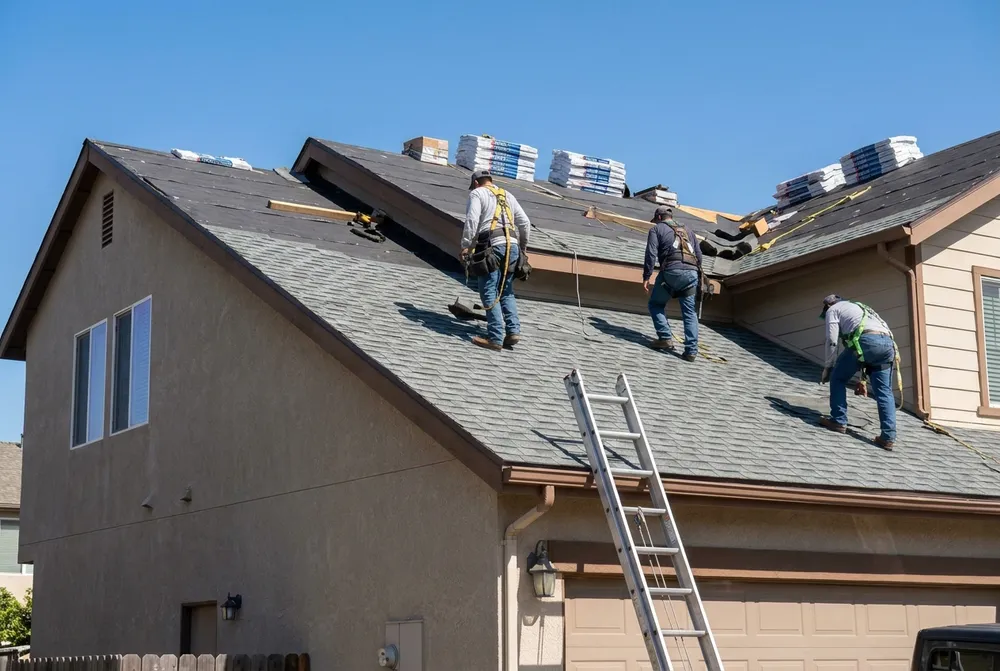
Yes. A full roof replacement in California almost always needs a permit. The office that issues it depends on your city. San Leandro, Oakland, and Alameda each run their own permit desk. Castro Valley and San Lorenzo go through Alameda County instead. Neither one is its own city. A licensed contractor pulls the right permit. We also book the inspection it requires, so you never have to guess which office to call.
Do you need a permit to replace a roof in California?
A new roof is a big job. California treats it that way. When we strip your roof down to the deck and build a new one, that work needs a building permit. This is true in every city we serve. The permit is not red tape for its own sake. It makes sure the new roof meets current California code. That includes Title 24 energy rules where they apply.
Only a few people can pull that permit. California requires roofers to carry a state license through the CSLB. A local permit alone is not enough. A permit can go only to a licensed contractor or to the property owner. Roofing falls under the C-39 classification. A permitted, code-built roof replacement from Tradition Roofing Company starts with our CSLB license, number 892345. You can check it free at cslb.ca.gov before you hire anyone.
Which office issues the permit in each East Bay city?
Here is where many homeowners get stuck. Each city handles the permit a little differently. The same question has six different answers across our service area.
In San Leandro, the Building and Safety Division runs the city Permit Center. A roofing permit goes only to a licensed contractor or the owner. Oakland uses a different model. It requires a Re-Roofing Certificate for a standard reroof. The job only needs a full building permit if it touches the framing or structure underneath. Hayward's 200 square foot permit threshold sets a specific size line. Any job that installs, repairs, or replaces more than 200 square feet of roof covering needs a permit there. The city also allows a new roof over only one existing layer. Alameda runs its own Permit Center too. Permits there are filed through its Accela Citizen Access online portal.
Castro Valley and San Lorenzo work differently from the rest. Neither is its own incorporated city. There is no city hall permit desk in either one. Castro Valley's permit and inspection both come from unincorporated Castro Valley's county permit path, the Alameda County Building Inspection Division. That office has served the county's unincorporated areas since 1946. San Lorenzo follows the same county path. Its permit is filed through the county's online reroof permit system. Call and we will pull the right permit for you, no matter which of these six offices your address falls under.
What is the difference between a repair permit and a replacement permit?
Not every roofing job needs the same paperwork. A full roof replacement always needs a permit. That is true any time we strip the roof to the deck and rebuild it. A contained roof repair usually does not. Resealing a piece of flashing or swapping a few cracked shingles typically falls under that lighter line.
Oakland's Re-Roofing Certificate process shows this contrast clearly. A straightforward reroof there only needs the certificate. That is a simpler step than a full permit. The moment the job touches the roof's framing or structure, Oakland requires the full building permit instead. Not sure which side of that line your job falls on? Ask us. We will give you a straight answer, not a guess.
What happens during a pre-roof inspection?
Some cities check the roof before the new one goes on, not just after. Hayward requires a pre-roof inspection. The city looks for dry rot, damaged sheathing, failing flashing, and worn underlayment. This happens before the new roof goes on. That inspection protects you. It catches hidden deck damage while the roof is still open. No problem gets sealed back up under a new surface by accident.
Homes in certain fire-prone areas face one more check. CAL FIRE maps the Oakland hills, the Hayward hills, and the Castro Valley canyons as High or Very High Fire Hazard Severity Zones. California Building Code Chapter 7A requires any roof in those zones to carry a Class A fire rating, the top level. It bans untreated wood shake. A permit review in these hillside areas checks for that rating specifically.
What happens if you skip the permit?
Skipping the permit might feel like a shortcut. It rarely saves you anything. An unpermitted roof can slow down a home sale. Many buyers and lenders ask for permit records on major work like a full reroof. Skipping the permit can also leave you without a clear, inspected record. That matters if a problem shows up later. The permit and its inspection confirm the work was done to code. That matters on a part of your home that keeps out rain and wind every day.
The safer path is simple. A licensed roofer pulls the permit before work starts, not after. The roof gets built to the code that permit represents.
How does Tradition Roofing handle the permit for you?
Fernando Maciel started Tradition Roofing Company in San Leandro in 2007. Close to twenty years later, pulling the right permit is still a normal part of every full roof replacement we do. That is true in every city we serve. We are a licensed California roofing contractor, CSLB number 892345, classification C-39.
Every job starts the same way. You get a free, written estimate before any work begins. You see the real price and the permit plan in writing. We identify which office your address falls under, whether that is a city permit desk or Alameda County. Then we file the paperwork and schedule any required inspection. We also build to California Title 24 energy rules where they apply, so the finished roof passes inspection the first time.
Call for a free estimate and let us handle the permit, the inspection, and the roof, from the deck up.
Talk to Tradition Roofing Company
Questions about your roofing job? We serve San Leandro and the surrounding area with honest, upfront advice.
Related articles
FAQ
Related questions
How much does a roofing permit cost in California?
Most residential reroof permits run about $150 to $500. That is a general statewide figure. It is not a fixed price. Your real fee depends on your roof's size. It also depends on which office issues it: San Leandro, Oakland, Hayward, Alameda, or Alameda County. We confirm the exact fee for your address before we file.
How long does it take to get a roofing permit approved?
A standard reroof permit often clears in about one to five business days. That is true when the job has no structural changes. Timing still depends on your city's workload. It also depends on whether your home sits in a fire hazard zone. That can add an extra fire-rating check. We file as soon as we have your signed estimate. There is no waiting on our end.
Does a roof repair need a building permit, or only a full replacement?
A full roof replacement in California always needs a permit. A small, contained repair typically does not. That includes work like resealing flashing or swapping a few shingles. If a repair grows into deck rebuilding or covers a large section, we tell you plainly. We will say so if it now needs a permit too.